
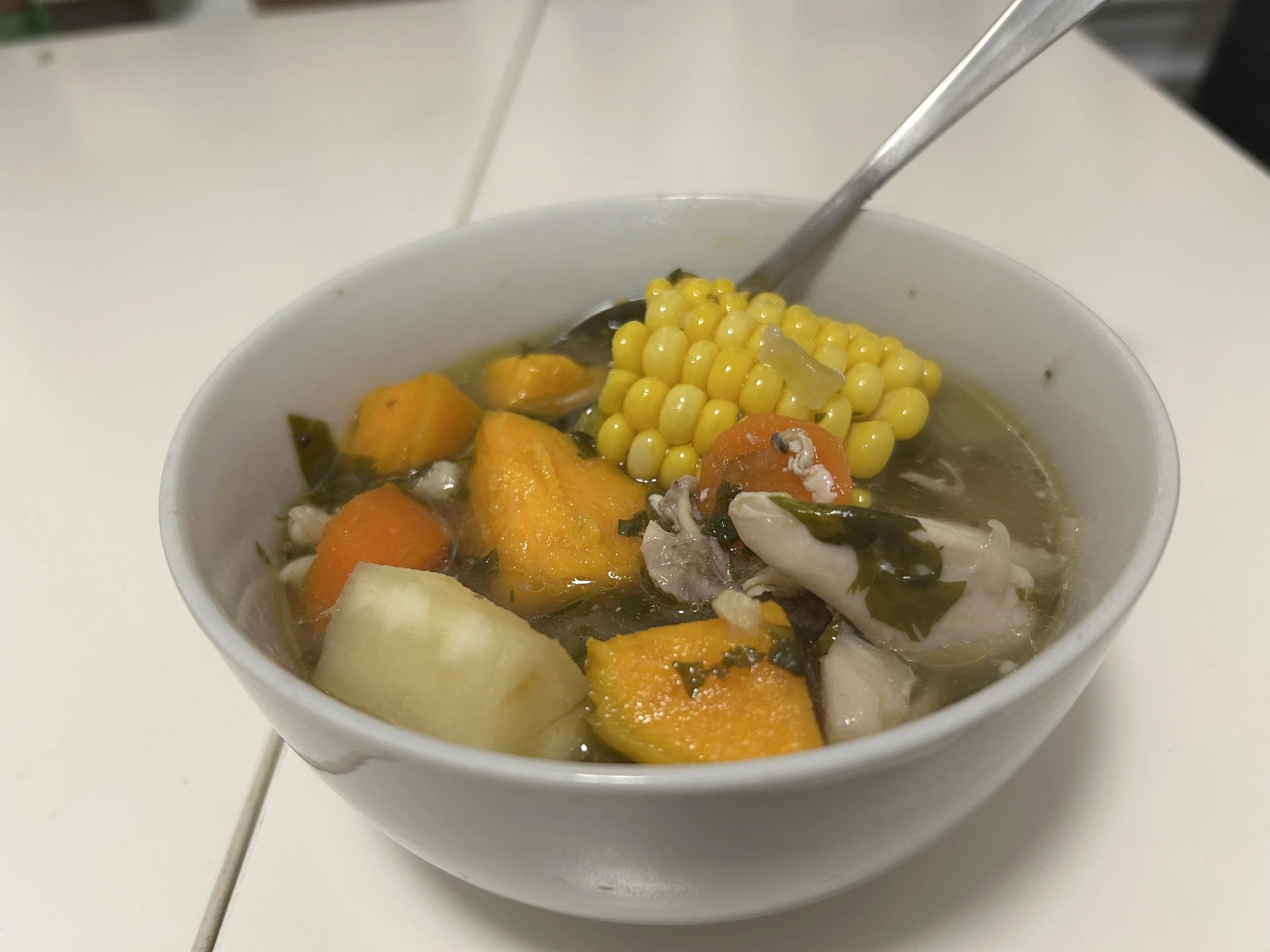
Make sancocho with us! Sancocho is a hearty chicken and vegetable soup, considered by some to be the unofficial national dish of Panama.
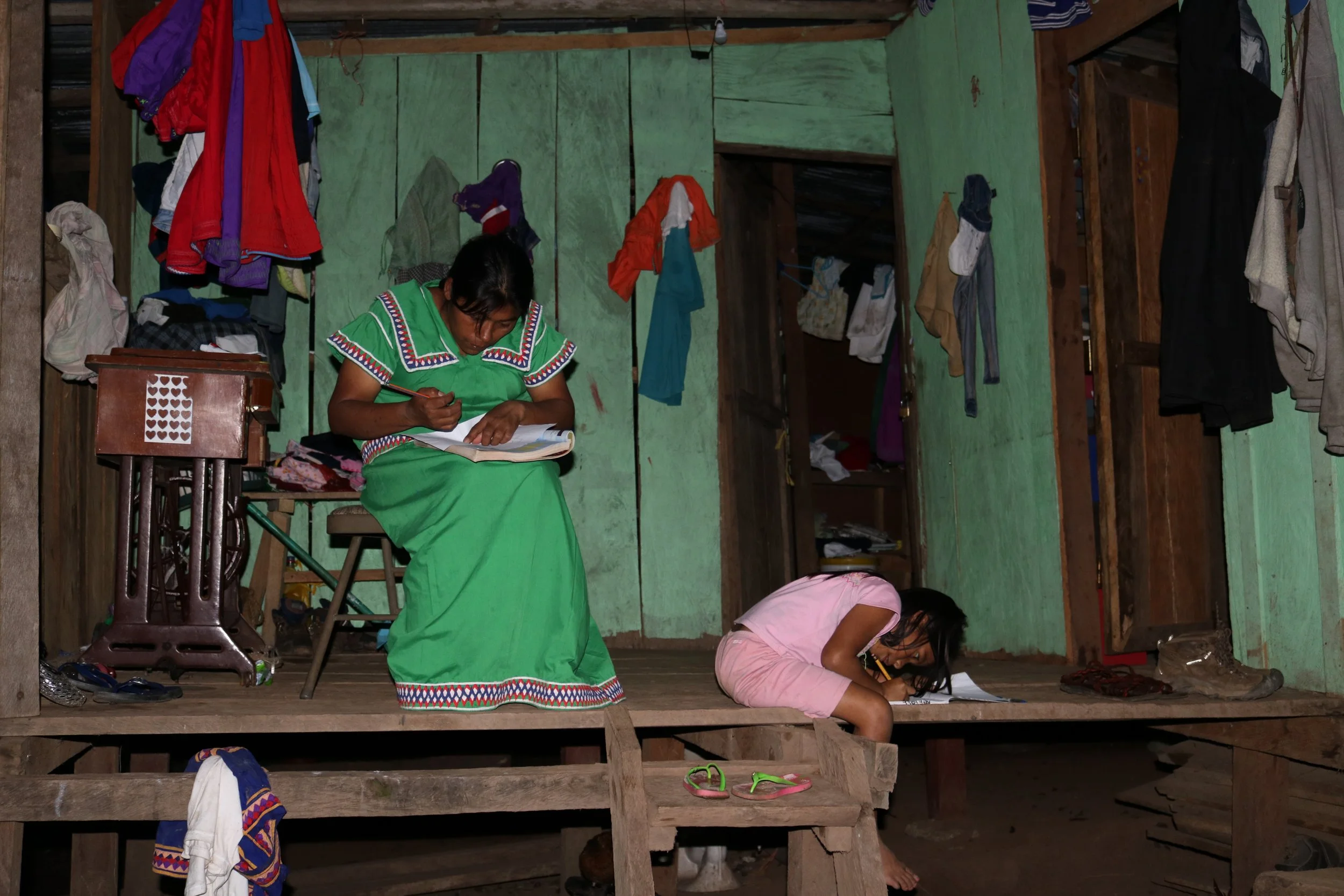
Few for Change was founded on the idea that investing in education means not just supporting young people, but building a better future for their communities. Now that Few for Change has supported students in the Comarca Ngäbe-Buglé for almost 16 years, we are learning together how to put our ideas into practice over the long-term.
Over the past few years, we have seen parts of this dream realized in some unexpected ways.
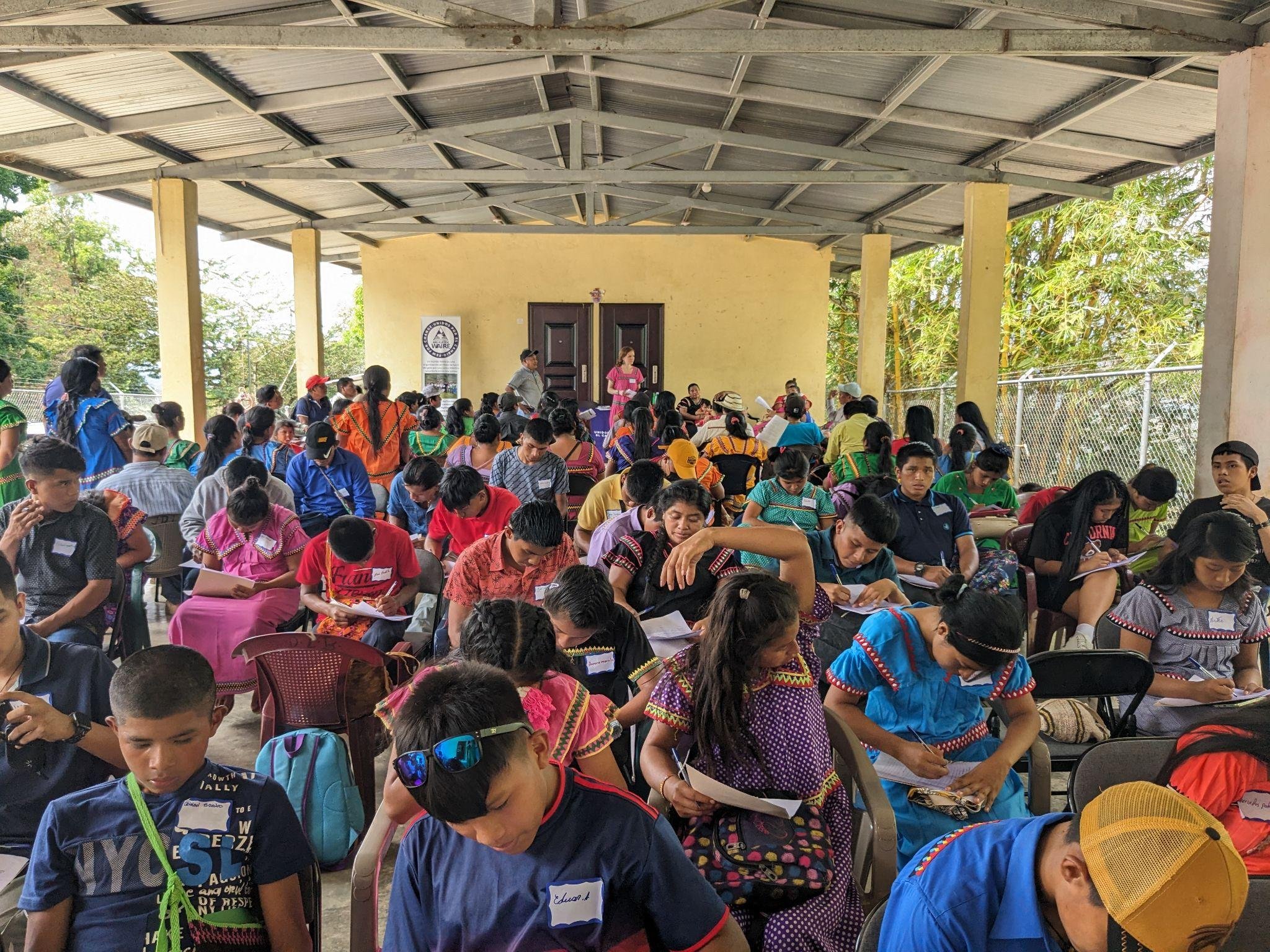
As we reflect on the past 15 years, it’s incredible to see how Few for Change has grown and evolved. In our 10 year blog post, we did a feature on Few for Change by the numbers. Those numbers have grown significantly!

In 15 years, Few for Change has awarded over 125 scholarships. Few for Change volunteers look at report cards and essays from scholarship recipients each year to determine which students will receive a Few for Change scholarship. During my time as an Education Access Fellow, I have analyzed more than 200 report cards from 84 Few for Change scholarship recipients between 2010 and 2021. This research shows that the barriers that stand in the way of Few for Change scholarship recipients don’t stop them from succeeding in school.

Each time Few for Change encounters José Manuel Sire, we see him do amazing things.
It started in February 2017, with an improvised speech at Few for Change’s annual scholarship ceremony.

Abby Outterson is a Few for Change Board Member and a writer for Public Health Post, an online magazine through Boston University’s School of Public Health that informs broader conversations around public health issues. For Indigenous People’s Day, we are sharing a post she wrote that centers the importance of Indigenous languages to public health.

Few for Change’s mission is to strengthen communities by improving access to education in underserved indigenous areas of Panama. Every year, it gets a little harder to do that. By itself, the COVID-19 pandemic has created myriad challenges for children and their families. Simultaneously, there is another global crisis that is making it harder for our students to pursue their dreams every year: climate change.

FFC Volunteer Morgan Oestereich shares some of what she learned in a university seminar on Indigeneity and the environment.

It’s been over a year since the COVID-19 pandemic forced schools around the world to move to remote learning. Although most schools in the U.S. have at least partially re-opened by now, countries such as Panama have not been able to re-open as quickly. Lack of infrastructure and a limited access to vaccines have both contributed to the slow reopening of schools in Panama. With a new school year getting underway in Panama, we checked in with some of our students about how remote schooling has been this past year, the challenges they’ve faced, and how they have persevered during the toughest of circumstances.

On March 1st, a new school year kicked off in Panama. Typically, we would have traveled to Panama in late February for a large scholarship ceremony with our students, their families, and our Panama-based volunteers, during which we would distribute the first installment of the scholarship money for the year. Each year this ceremony grows and in recent years we’ve reached more than 100 attendees. This is my favorite moment of the year with Few for Change, where we get to meet our new students, catch up with all of our existing students (and see whether they’ve grown a foot!), and spend quality time with our Junta Directiva (Advisory Board) in Panama, either during meetings or over meals in their homes.

COVID-19 has wreaked havoc on indigenous and rural communities not only in health, but in access to education. Latin America and the Caribbean has felt much of the brunt of the impact with disconcerting statistics from UNICEF stating that over 97% of students were still out of the classrooms as of November 9th in Latin America and the Caribbean. This UNICEF study shows that since the beginning of the COVID pandemic, children in these regions have lost an average of four times more days of in person school comparatively to the rest of the world. This report details the undefined start dates for returning to schools in person, while the pressure in indigenous and rural populations to resume grows[1].
One of our guiding principles when we started Few for Change in 2009 was a simple but deeply held belief: the majority of every dollar donated should go directly to the communities with which we work. Our goal has always been to strengthen access to education to help break the cycle of poverty in the Ngäbe-Buglé Comarca. Now, nearly two decades later, we want to share with our donors how that commitment has held up over time.